
Year 4
❤️ Cycle B ❤️
Genre: World Music Traditions
Style: Music in Arabic
Composers:
Nusrat Fateh Ali Khan
Reem Kelani

Nusrat Fateh Ali Khan was born in Pakistan in 1948 – which was 3 years after World War 2 ended. His father was a qawwal – a person who was involved in performing Sufi Islamic devotional music called Qawwali – which was said to bring the performer and listener closer to God. Nusrat’s father would have preferred him to study to become an engineer or doctor but Nusrat had inherited his father’s amazing skills. His father heard him practicing his singing and thought he was rather good! So he relented and began to train him – Nusrat then sang at his funeral and this was the humble beginning of an eventual international career.
He went on to sing with western rock musicians and brought the beautiful qawwali style of music to audiences that may never have heard it. He was a skilled vocalist who could sing in Urdu, Arabic, Persian, and Punjabi as well as an instrumentalist who could play the sitar, vichitra veena, and sarod.
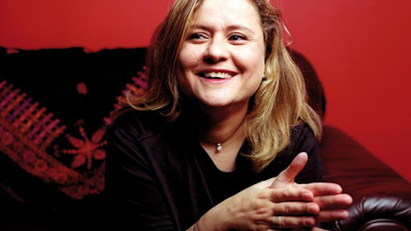
Reem studied piano as a child this introduced her to western classical music. Her father loved jazz. In ‘Sprinting Gazelle’, you can hear the double bass and drums (rhythm section) repeated rhythm – an ostinato the whole way through! This is just like jazz music. She mixes jazz with arabic music and instruments. Reem Kelani was born in the UK but raised in Kuwait by Palestinian parents. She became familiar with the music of her native culture and wanted to explore it further.
She spent a great deal of time researching her heritage and the traditional Palestinian songs sung by women in Nazareth and in refugee camps. Kelani used her findings and combined them with poems by Mahmoud Darwish to create a whole album inspired by her Palestinian heritage.
Peter Gabriel performing ‘Signal To Noise’ live with Nusrat Fateh Ali Khan in 1996. The live recording was shot one year before the death of the late Nusrat Fateh Ali Khan.
Reem Kelani, ‘the unofficial ambassador for the culture and music of Palestine’ put on an extraordinary heritage-inspired musical performance inspired by and dedicated to the Palestinian coast, to coincide with the Palestinian Museum’s exhibition ‘A People by the Sea: Narratives from the Palestinian Coast’.
Lesson Resources: